Short answer: At the 2nd Annual 858 CFO Summit in Las Vegas on November 8, 2026, about 75 restaurant finance leaders compared notes on 2027. Three priorities came up again and again: fix the data foundation before adding new tools, put AI to work on finance's own workload (the close, the reconciliations, the cash forecast), and move from reacting to results to seeing them coming. You don't need a CFO to do any of that. You need clean, consistent books that show up fast enough to act on.
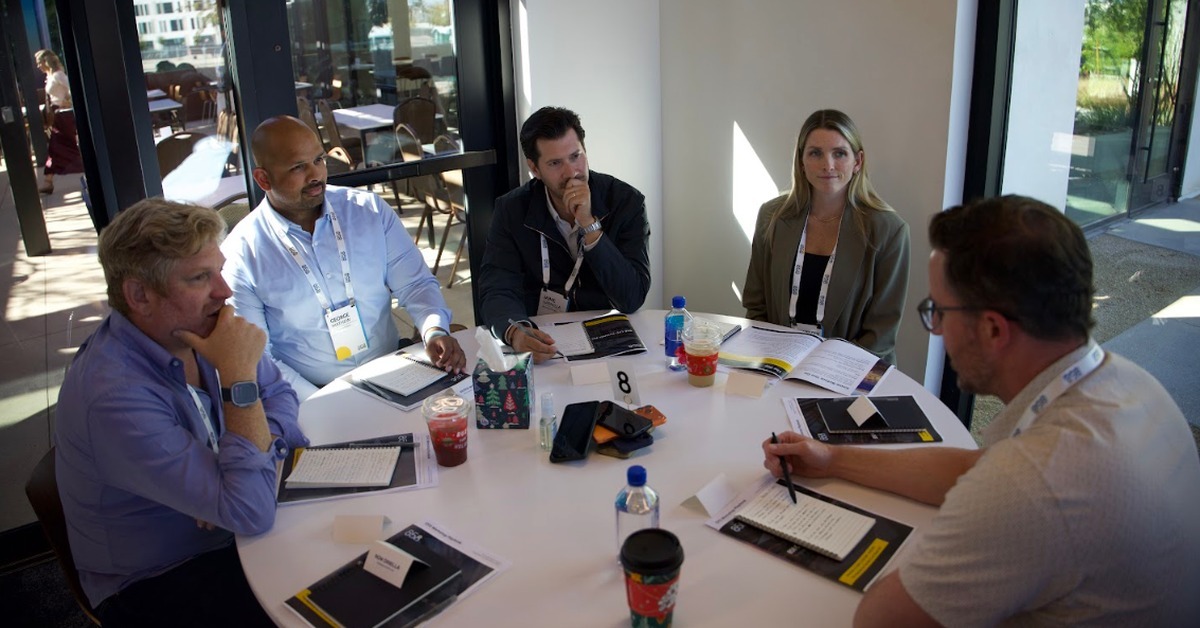
On the Sunday before RFDC, I sat at Table 8 at the 858 CFO Summit with restaurant finance leaders. At 1:00 the doors closed and every phone went into a stack in the middle of the table. No panel, no pitches. FIXE was one of 11 partners in the room, and 858 asks its partners to show up one way: listen, ask questions, learn. So that's what I did.
Here's what restaurant CFOs said they're working on for 2027, pulled from the workshops and from 858 Partners' survey of registered attendees, plus what it means if you own one restaurant or ten and don't have a finance team. Credit for the research goes to 858 Partners. You can read their full CFO Summit 2026 recap here.
What is the 858 CFO Summit?
The 858 CFO Summit is a peer event for restaurant finance leaders, hosted by 858 Partners in Las Vegas on the Sunday before the Restaurant Finance & Development Conference (RFDC). Year 2 grew from 50 finance leaders to 75, from brands including Denny's, P.F. Chang's, Golden Corral, Dave's Hot Chicken and Salt & Straw. Facilitator Angela Parker ran small-group workshops in three tracks: seeing around the corner, protecting the margin and growing smart.
What are restaurant CFOs prioritizing for 2027?
Here's the short version, with what each priority looks like at owner scale.
| Priority | What CFOs said | What it means for your restaurant |
|---|
| Fix the data foundation | Technology strategy and stack rationalization was the top priority in 858's survey, by a wide margin. In the workshops, CFOs described too many systems and no single source of truth. | Get one chart of accounts and every POS mapped the same way before you add another app. |
| Put AI on finance's own work | More than a third of finance leaders raised AI on their own. The wins they described: reviewing the general ledger, reconciling bank activity in minutes and automating most of month-end close. | Ask your bookkeeper what's automated and who checks the output. |
| See problems before the P&L does | One in five named forecasting, cash visibility or faster reporting as the thing they most want to strengthen in 2027. | Track weekly KPIs and get your monthly P&L while you can still act on it. |
| Protect margin where you control it | Margin or cost pressure came up in half of the written survey answers. In the workshops, labor and third-party delivery got the most attention. | Compare labor to sales every week, and record delivery gross so you can see what the fees cost you. |
| Treat growth like a bet | CFOs leaned conservative: fund growth from operating cash, not debt, and strengthen the existing units before adding more. | Know each location's unit economics before you sign the next lease. |
Why does clean data come before any new tool?
The loudest forecasting problem at the Summit wasn't skill. It was data. CFOs described flying blind with too many systems, and franchisee financials that don't line up even when everyone uses the same chart of accounts. The fixes they traded were practical: benchmark each unit against peers in the same sales band, build an ideal P&L that says what every line should be at a given sales level, and track daily and weekly KPIs so the P&L stops being the first warning.
Here's the thing. If the CFO of a national brand can't forecast off messy data, neither can you. A forecasting tool sitting on top of books where delivery is booked net one month and gross the next will give you a confident wrong answer. Start with the books.
If you run more than one location, our guide to chart of accounts standardization and our post on sales and expense gaps in multi-unit reporting walk through the setup.
How are restaurant finance teams using AI right now?
This was the most concrete conversation of the day. CFOs described AI reviewing the general ledger, checking journal entries, reconciling bank activity across entities in minutes instead of an analyst's week, forecasting cash daily and building board decks in a fraction of the time. One franchisor uses it to reconcile franchisee reporting and now spots franchisee stress earlier.
Two cautions came with it. Teams can dump everything into AI without checking what comes out, and many operators are keeping AI behind the scenes instead of in front of guests for now. The finance leaders getting the most from it pick one use case, put a dollar figure on it and keep a person checking the output.
That's the model FIXE is built on: software does the heavy lifting, and a restaurant bookkeeper who knows your P&L checks the work before it reaches you.
What does seeing it coming look like without a CFO?
One CFO in 858's survey summed up the goal as moving from reacting to financial results to anticipating them. Another named the enemy: "silent profitability erosion." That's margin leaking a little at a time in places nobody's looking, until it shows up on a P&L weeks later.
At owner scale, anticipating doesn't take a finance department. It takes three habits:
- A weekly look at sales, prime cost and labor as a percentage of sales.
- A monthly P&L that lands within days of month end, not weeks.
- A target P&L that tells you what each line should be at your sales level, so a bad number jumps out.
If you're wondering whether you've outgrown that, read 5 signs your restaurant needs a deeper look at its numbers.
What's different for franchisees?
Both sides of the franchise agreement were in the room. Franchisee CFOs put labor, pricing and delivery first, because those are the levers they control. The guest relationship mostly sits with the brand. Franchisor CFOs kept coming back to the same number from the other side: franchisee profitability.
Franchise CFOs in the workshops described three kinds of franchisees: newer operators who lean on the brand's model, sophisticated operators who challenge every assumption, and pragmatic ones who want clean, timely numbers. Whichever one you are, the ask is the same: know your unit economics, location by location. For what to look for in a bookkeeper, see our comparison of bookkeeping services for restaurant franchises.
What can you do this month?
Five ideas from the Summit, sized for an owner-operator:
- Build a target P&L. Write down what every line should be at your current sales level, then compare each month against it.
- Check scheduled hours against actual punches. One CFO uses AI for this, and it caught padded hours. A weekly report from your scheduling and payroll systems can do the same job.
- Look at delivery gross. Record delivery sales at the full order value and book the platform fees as an expense, so you can see what delivery really costs.
- Tie growth to cash. CFOs at the Summit leaned toward funding new units from operating cash and strengthening what they already run first.
- Pick one thing to automate. Put a dollar figure on the time it takes today, automate it, and keep someone checking the output.
Are your books ready for 2027?
Take the free Health Score to see where your books stand today. Or book a demo and we'll show you what weekly KPIs and a fast, reconciled monthly P&L look like for your restaurant.
Take the free Health ScoreBook a demoFrequently asked questions
What is the 858 CFO Summit?
A peer event for restaurant finance leaders hosted by 858 Partners. The 2026 Summit was held November 8 in Las Vegas, the Sunday before RFDC, with about 75 finance leaders from company-owned brands, franchisors and franchisees.
What are restaurant CFOs' top priorities for 2027?
In 858 Partners' pre-event survey, technology strategy and stack rationalization led by a wide margin, followed by ERP and back-office systems. Forecasting, cash visibility, margin protection and practical uses of AI also came up often.
How are restaurant CFOs using AI?
Mostly on finance's own workload: reviewing the general ledger, checking journal entries, reconciling bank activity, automating much of month-end close, forecasting cash daily and building board decks. The leaders getting the most from it keep a person checking the output.
Do I need a CFO to forecast cash?
Usually not at first. Most owner-operators need clean, consistent books, weekly KPIs and a monthly P&L delivered quickly. When the decisions get bigger, like financing new units, it may be time for more. See 5 signs your restaurant needs a deeper look at its numbers.
Keep reading
Source: survey and workshop findings from 858 Partners' CFO Summit 2026 recap. 858's pre-event survey covered about 75 registered finance leaders, about 50 of whom hold the CFO title. Thank you to Juan (JG) George and the 858 Partners team for having FIXE as a partner.
About the author
Ryan Handel is the co-founder and CEO of FIXE. He spent more than 20 years in the restaurant industry before starting FIXE, which now does the books for 600+ restaurant locations.
Connect with Ryan on LinkedIn.